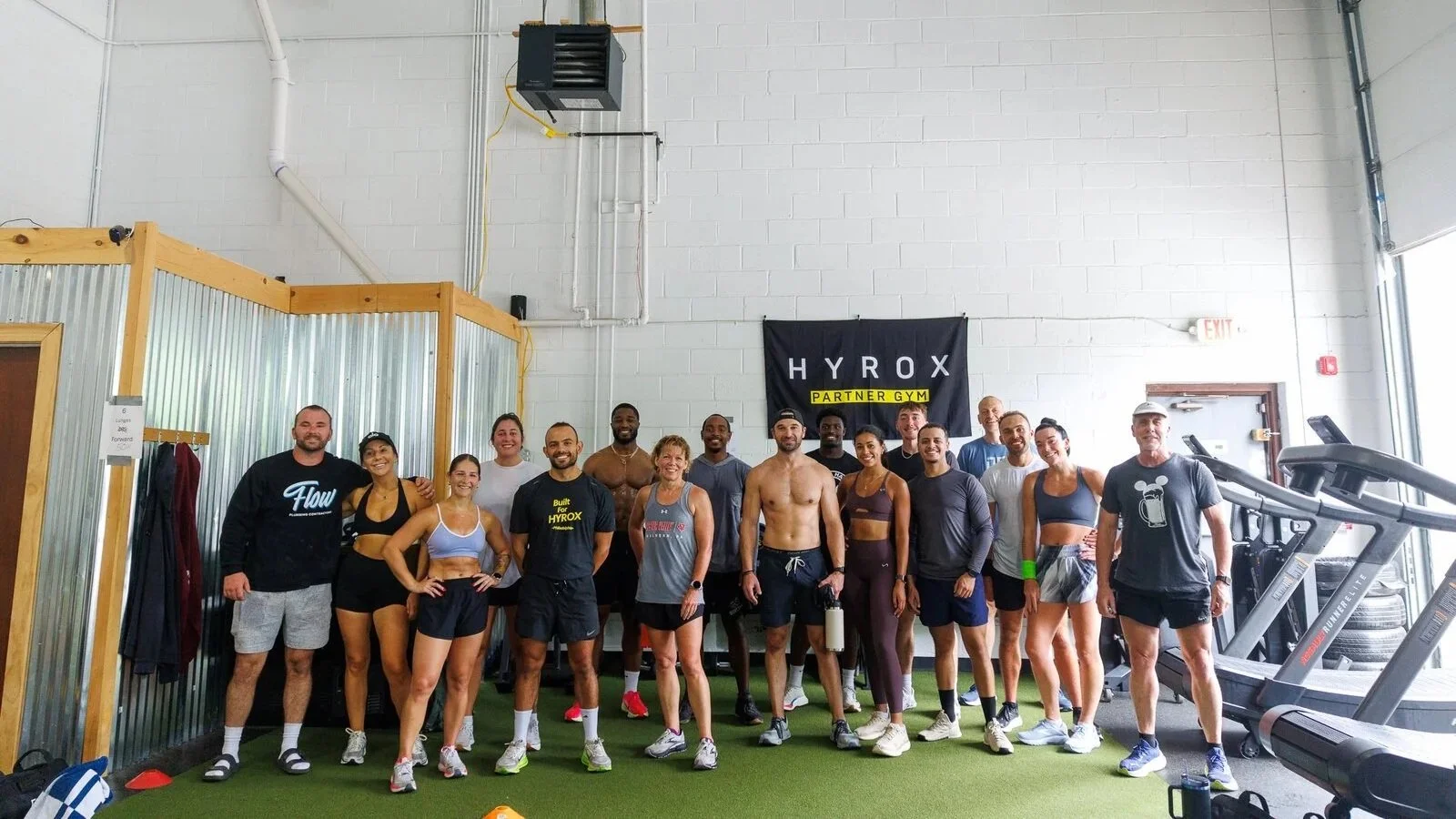
HYROX, at its core, blends endurance running with functional strength movements. This hybrid style of training aligns closely with evidence-based practices for disease prevention and long-term health. Combining aerobic and resistance training, known as concurrent training, drives adaptations across multiple physiological systems, making it a powerful model for improving both length and quality of life.
Other forms of fitness can deliver many of the same benefits. But I believe HYROX stands out in how it makes this balanced style of training accessible, structured and motivating for people who want to improve their health and longevity.
HYROX Is for Everybody
You don't have to compete in a HYROX event to benefit from HYROX training. The health benefits described in this post come from the training itself: hybrid training that combines running with functional strength work. Whether you want to race, train for fun, or simply stay healthy and independent as you age, HYROX-style training can meet you where you are.
Every movement can be scaled to your current fitness level, so beginners and experienced athletes can train side by side. Competing can be a great goal, but it is never a requirement.
Cardiovascular Fitness and Muscular Health
Aerobic exercise is well established in the literature as a primary protective factor against cardiovascular disease. It lowers blood pressure, reduces arterial stiffness and lowers resting heart rate (Booth et al., 2012). These adaptations reduce the risk of coronary heart disease, stroke and type 2 diabetes.
Cardiorespiratory fitness, often expressed as VO₂ max, is considered by many in the medical community to be one of the strongest predictors of longevity. People with higher cardiorespiratory fitness have a significantly lower risk of all-cause mortality, and research has found no upper limit to that benefit (Mandsager et al., 2018). This is likely due to improved cardiovascular efficiency, enhanced mitochondrial function and better metabolic regulation, all of which protect against chronic disease and promote healthy aging.
An equally important predictor of longevity and health is muscle mass and strength. The strength components of HYROX training help build and maintain muscle mass and support bone health. Low muscle mass (sarcopenia) and reduced strength, particularly grip strength, are strongly associated with higher all-cause mortality (Leong et al., 2015).
These metrics become increasingly important for the aging athlete. A DEXA scan is a practical way to track them: it is the clinical standard for bone mineral density and gives a good estimate of lean mass. One caveat: HYROX loads are moderate and high-rep, while bone responds best to heavy loading and impact. Adding some heavier strength work alongside HYROX training is worthwhile, especially as athletes get older.
Grip Strength: A Practical Benchmark
Longevity experts frequently use grip strength as a marker of functional strength. A popular benchmark, promoted by longevity physician Peter Attia, is the farmer's carry. Men should be able to carry their own body weight, split across both hands, for one minute. For example, an 80 kg man would carry 40 kg in each hand. Women should target 75% of their body weight.
This is a goal for health and longevity, not necessarily for HYROX performance. The test itself has not been validated in research, but it is a practical way to work toward the grip strength levels that studies link to a longer, healthier life.
The Global Impact
As HYROX continues to grow globally, I am seeing more people improve their health and fitness. HYROX is unique in how it enables people to pursue fitness regardless of their experience with exercise. Training for and competing in HYROX often lays a foundation and builds habits that lead to a lifelong pursuit of healthy living. Scaled up, this kind of participation can make a meaningful contribution to global health.
Public health researchers have estimated what would happen if more of the world met physical activity guidelines. The result would be large reductions in chronic disease, longer life expectancy and lower healthcare spending. Some highlights:
The World Health Organization estimates that 4 to 5 million deaths per year could be averted if the global population were more physically active.
People who are insufficiently active have a 20–30% higher risk of death than those who meet aerobic activity recommendations.
Muscle-strengthening activity is associated with a 10–17% lower risk of all-cause mortality. Combined with aerobic exercise, the reduction is about 40% (Momma et al., 2022), which is exactly the combination HYROX training delivers.
Physical inactivity already cost health care systems an estimated $54 billion worldwide in 2013 (Ding et al., 2016). On top of that, the WHO projects that new cases of preventable disease linked to inactivity will add about $27 billion per year in treatment costs if nothing changes.
What This Means for My Coaching
The biggest health gains come when people move from no activity to some activity: the benefit curve is steepest at the very start. That is why I progress my athletes gradually from wherever they begin. What may seem insignificant to an experienced athlete can be life-changing for someone at the start of their fitness journey.
Conclusion
HYROX training is more than preparing for competition. Cardiorespiratory fitness and muscular strength are among the strongest modifiable predictors of longevity, and HYROX training builds both. It also supports metabolic health, one of the main pillars of disease prevention. By training these systems together, HYROX helps people build a foundation that supports independence, function and vitality across the lifespan.
You don't need to be fit to start. You just need a starting point. Try the farmer's carry test above and see where you stand. Then come train with us at Fitness Factory. We'll meet you at your level and build from there.
References
Attia P. Outlive: The Science and Art of Longevity. Harmony, 2023.
Booth FW, Roberts CK, Laye MJ. Lack of exercise is a major cause of chronic diseases. Comprehensive Physiology. 2012;2(2):1143–1211.
Ding D, et al. The economic burden of physical inactivity: a global analysis of major non-communicable diseases. The Lancet. 2016;388(10051):1311–1324.
HYROX. Level 2 Coach Certification.
Leong DP, et al. Prognostic value of grip strength: findings from the Prospective Urban Rural Epidemiology (PURE) study. The Lancet. 2015;386(9990):266–273.
Mandsager K, et al. Association of cardiorespiratory fitness with long-term mortality among adults undergoing exercise treadmill testing. JAMA Network Open. 2018;1(6):e183605.
Momma H, et al. Muscle-strengthening activities are associated with lower risk and mortality in major non-communicable diseases: a systematic review and meta-analysis of cohort studies. British Journal of Sports Medicine. 2022;56(13):755–763.
World Health Organization. Global Status Report on Physical Activity 2022.
World Health Organization. Physical activity fact sheet.