
Photocredit -SandrienBPhotography
Did you know that most HYROX athletes who end up with the medical team don't get hurt on the sled, the wall balls or the burpees? They get hurt on the run.
HYROX looks like a strength-and-conditioning race. So it's easy to assume the stations are where things go wrong. A recent survey-based study from a US HYROX event suggests otherwise. The 8 km of running, and the calves and shins doing that work, are where most athletes break down.
The study
Researchers surveyed athletes at HYROX Anaheim, California, in December 2024. Anyone who went to the on-site medical staff was asked to fill in a survey. It covered demographics, training history and the details of their injury. Only injuries directly caused by racing HYROX counted.
Of 3,784 competitors, 89 (2.4%) sought medical care during the event. 42 of them completed the survey. In other words, roughly 1 in 40 athletes needed the medical team that day.
The surveyed group was 64% male, with an average age of 38.5 (range 26 to 60) and an average BMI (body mass index) of 27.6. That's a fairly typical HYROX field: committed age-groupers.
What they found

Running sent most athletes to the medical tent.
78.6% of injuries happened during the running segments.
95.2% (40 of 42) involved the lower body, and 61.9% were calf or shin complaints.
Only 1 athlete had an acute traumatic injury (a hand/finger injury). Everything else was the body giving out rather than an accident.
59.5% blamed cramping or electrolyte imbalance, by far the most common cause. Next came inadequate preparation at 9.5%.
Among the stations, burpee broad jumps and the sled pull caused more problems than the rest.
And here's the twist: this wasn't an untrained crowd. 88% had trained specifically for the event, averaging 6 hours a week. But only 1.9 hours of that went to running. That's less than a third of their training time, for a race where running is half the work.
What I see on race day
I've coached HYROX athletes for four years. The numbers match what I see at races, and two things stand out.
Most people skip a proper warm-up. A good warm-up takes around 20 minutes. Yet athletes walk into the warm-up zone and go straight to heavy sled pushes and sandbag lunges. No mobility work. No gradual build-up. Cold calves and hips meet race-weight loads within minutes.
Muscular endurance is the real limiter. Most HYROX classes run 50 to 60 minutes, with plenty of breaks. A race often takes 75 to 90 minutes or more, with no real rest. That gap catches up with almost everyone.
So I tend to see people break down somewhere between 45 and 60 minutes in. Many things can lead to that point. Two causes come up again and again:
They went out too hard in the early runs and stations.
They hit the sled push already fatigued and keep forcing it. That's where calf injuries, plantar fasciitis and other muscle strains show up.
Why the sled push hits the calves

The study flagged the sled pull. On race day, I see the push do just as much damage. A physical therapy guide from Physitrack explains why.
On the push, your ankles stay in a pointed position and you drive through the forefoot. The calf gets almost no spring or recoil. Then you drop the sled and start running. Now the same calf and Achilles have to absorb and rebound with every stride, and they're already tired. That handoff is where strains happen.
It's the same pattern I've watched play out in athletes for years.
What it means for your training
The study describes what happened. It doesn't test fixes. Still, the pattern points to a few sensible priorities.
Respect the run. Eight 1 km runs between heavy stations is a different stress from a fresh 8 km. Practise running on tired legs: compromised runs straight off a sled push, lunges or wall balls.
Train closer to race duration. A 50 to 60 minute class won't prepare you for 90 minutes of continuous work. Add 90-minute sessions and enter simulation events. That's why our Sunday 8:00 am workouts run 90 minutes. They get you closer to the time an average HYROX race takes. Learn what it feels like to work at threshold for a long stretch before race day.
Build calves and shins that can take it. Calf raises (straight and bent knee), tibialis work and gradual increases in running volume give the lower legs time to adapt. Hard-surface venues and racing shoes add load. Test both before race day.
Treat fuel and fluids as part of the race. Most athletes who sought care cited cramping. Have a hydration and electrolyte plan and rehearse it in long sessions. Don't try anything new on race day.
Practise the problem stations. Burpee broad jumps and both sleds stand out. Train them at race weight and race fatigue. Work on efficient technique so they cost your legs less before the next run.
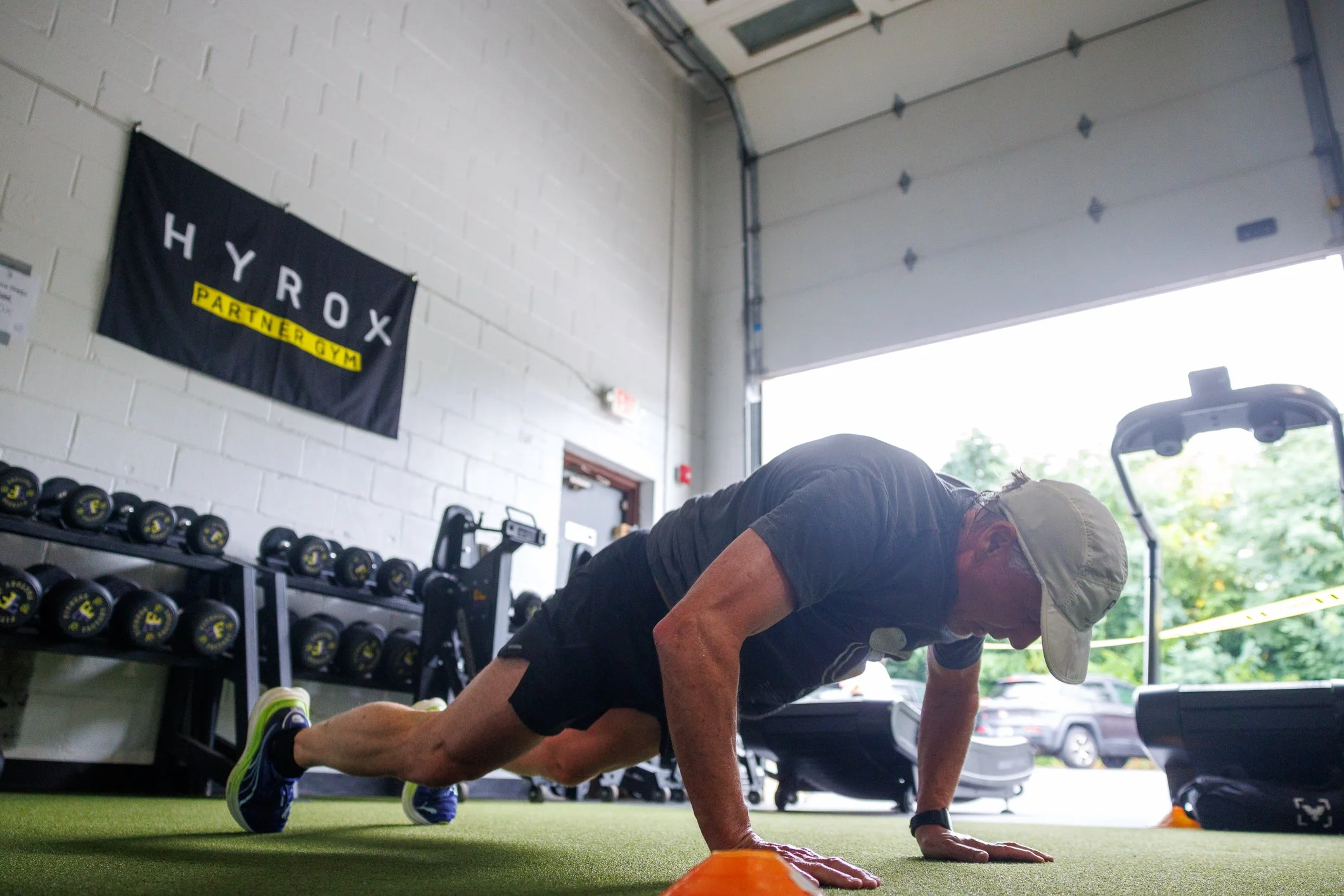
Pace the first half. Cramps and breakdowns tend to hit in the second half. Going out too hard on runs 1 to 3 leaves little in reserve for the stations that hurt most.
The bottom line
HYROX is a running race with stations in between, and the data backs that up. Running-related calf and shin problems, often tied to cramping, were the main reason athletes needed medical help.
Keep the limits in mind. This is one event, and only 42 athletes were surveyed. Treat it as a useful signal rather than the final word. But if your training plan is mostly sleds and wall balls with a little running on the side, this is a good reason to rebalance it.
Train for the whole race

Our group HYROX training at Fitness Factory in West Chester builds exactly this: compromised runs, race-length sessions and station work under fatigue. Join us Sundays at 8:00 am for a 90-minute session that comes close to real race duration. Want a plan built around your own weak spots? Get in touch.
Sources:
Data from an injury survey at HYROX Anaheim (Dec 2024), covered in the HYROX Level 2 coaching course.
Sled push mechanics: Physitrack, "HYROX Injuries: A Physical Therapist's Guide to the Sled, Run, and Burpee Toll" (Aug 2026).
This post is for general information, not medical advice. If you have pain or recurring cramps, talk to a qualified professional.